
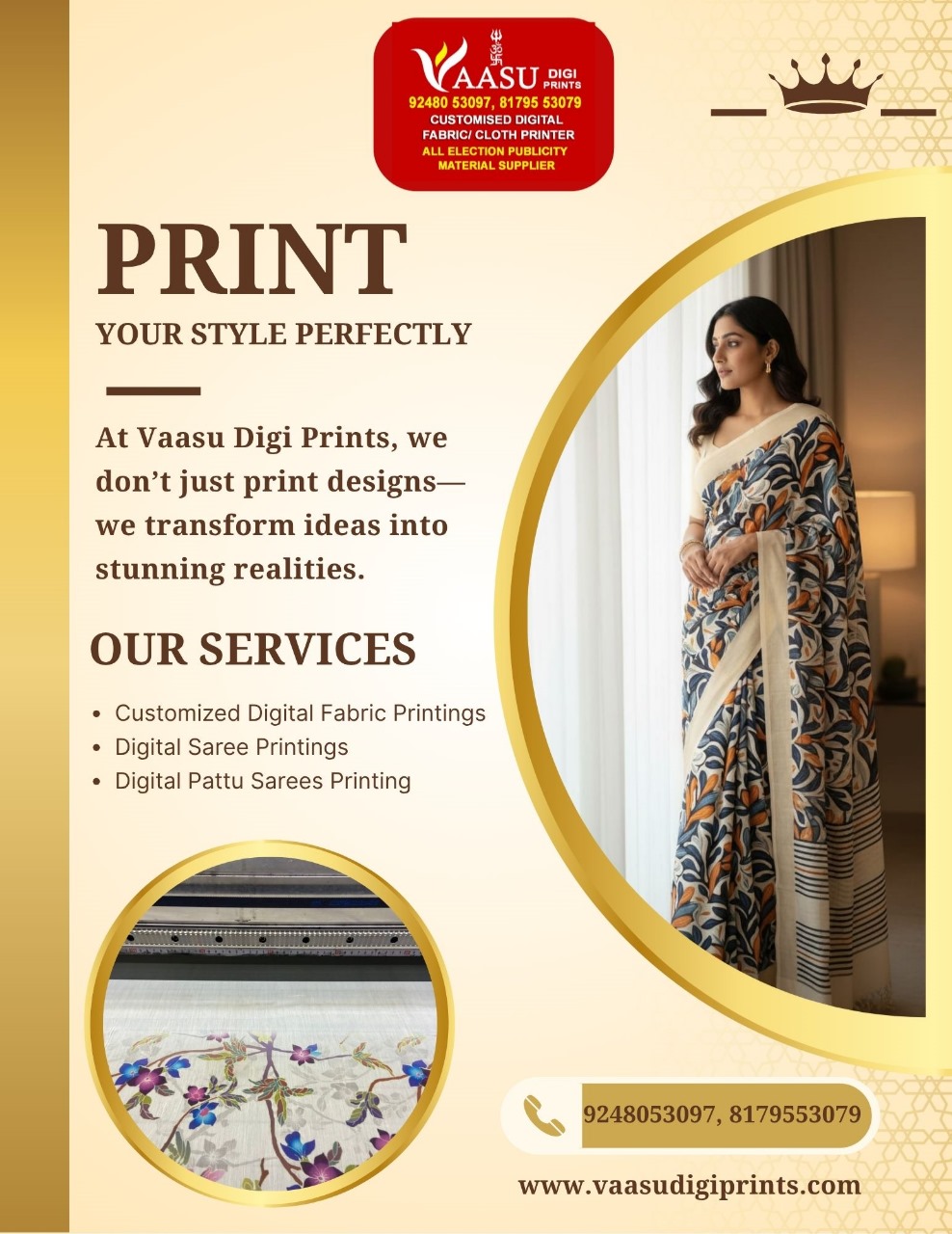
Digital Saree Printing vs Traditional Saree Printing: Which Is Better?
Compare digital saree printing vs traditional saree printing to choose the best method based on quality, customization, cost, and production speed. Sarees have always been an integral part of Indian fashion, evolving over centuries through various techniques and craftsmanship. Today, the textile industry offers two major approaches to saree design: digital saree printing and traditional saree printing. Both methods have their own strengths, aesthetics, and applications. Understanding the difference between these techniques helps designers, retailers, and customers choose the best option for their needs. Modern printing experts like vaasudigiprints bridge the gap between tradition and technology with advanced solutions.

Traditional saree printing includes methods such as block printing, screen printing, hand painting, and resist dyeing. These techniques are deeply rooted in heritage and craftsmanship. Traditional prints often carry cultural significance, handcrafted charm, and unique imperfections that add character to each saree. However, these methods are time-consuming, labor-intensive, and limited in terms of color combinations and design complexity.
In contrast, digital saree printing uses advanced inkjet technology to print designs directly onto fabric. This method allows high-resolution patterns, intricate detailing, photographic images, and smooth color gradients. Digital printing offers speed, precision, and design flexibility, making it a preferred choice for modern fashion demands. With professional digital solutions from vaasudigiprints, designers can achieve consistent quality across small and bulk orders.
One major difference lies in customization and design freedom. Traditional printing requires separate screens or blocks for each design, making customization expensive and slow. Digital printing allows instant design changes, color adjustments, and personalized layouts without additional setup costs. This flexibility makes custom saree printing easier and more affordable. Many fashion brands rely on vaasudigiprints for on-demand customization and exclusive designs.
When it comes to fabric compatibility, both methods perform well but with differences. Traditional printing works best on cotton and natural fabrics, while digital printing is suitable for silk, cotton, georgette, chiffon, satin, and blended fabrics. Digital technology ensures even ink absorption and color fastness across various materials. With expert fabric handling, vaasudigiprints ensures optimal results regardless of fabric type.
Another key factor is production time and scalability. Traditional saree printing can take days or weeks depending on design complexity and quantity. Digital saree printing significantly reduces turnaround time, making it ideal for seasonal collections and fast fashion cycles. Businesses benefit from quicker delivery and lower inventory risks when working with digital printers like vaasudigiprints.
From a cost perspective, traditional printing may be economical for large volumes of repetitive designs, while digital printing is cost-effective for small batches and customized orders. Digital printing also minimizes fabric wastage and supports sustainable production practices.